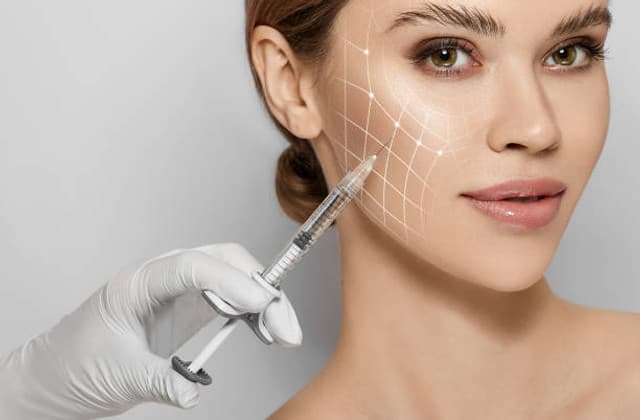
Filler migration signs include a shelf or fullness above the natural lip line (often called a "filler mustache"), blurred lip borders, persistent puffiness beyond the treated area, lumps or uneven texture, progressive asymmetry, and a feeling of heaviness in the skin. These changes tend to develop gradually over weeks or months after treatment and are safely resolved with hyaluronidase, an enzyme that dissolves hyaluronic acid filler precisely and non-surgically.
Filler migration signs include a shelf or fullness above the natural lip line (often called a "filler mustache"), blurred lip borders, persistent puffiness beyond the treated area, lumps or uneven texture, progressive asymmetry, and a feeling of heaviness in the skin. These changes tend to develop gradually over weeks or months after treatment and are safely resolved with hyaluronidase, an enzyme that dissolves hyaluronic acid filler precisely and non-surgically.
You noticed something has shifted. Maybe your lip border looks softer than it used to, or there is a slight puffiness above your upper lip that was not there when you left the clinic. You have been Googling quietly, not sure whether what you are seeing is normal swelling, a sign of something going wrong, or simply your imagination. If that sounds familiar, you are not alone, and you are absolutely right to look into it.
Filler migration is one of the most talked-about topics in aesthetics right now, and for good reason. As dermal fillers become more popular across Malta and Europe, more people are encountering results that have shifted over time, whether from treatments carried out recently or years ago. Understanding the filler migration signs to look for, why migration happens, and what your options are puts you firmly in control of your journey. Results may vary for each individual, but the reassuring truth is this: migration is manageable, reversible, and, with the right practitioner, largely preventable.

What Is Filler Migration?
Filler migration refers to the movement of injected dermal filler away from its original placement site. Most modern fillers are made from hyaluronic acid (HA), a substance naturally found in the skin that attracts and binds water. According to the NHS information on dermal filler complications, dermal fillers are now prescription-only injectables in the UK, reflecting the importance of medical oversight in their use. When injected into the lips, cheeks, jawline, or tear troughs, HA filler is designed to stay in the targeted tissue plane. In some cases, however, the filler shifts into adjacent tissue, creating results that look different from what was intended.
Migration should be distinguished from normal post-treatment changes. After any filler treatment, some swelling, minor unevenness, and firmness are entirely expected for the first one to two weeks. True migration tends to appear later, often weeks to months after treatment, and the changes develop gradually rather than improving. The affected area may look fuller, softer at the borders, or slightly displaced compared to the original result.
It is also worth noting that migration exists on a spectrum. In mild cases, a small amount of filler moves just beyond its intended boundary, causing subtle softening of the lip line. In more pronounced cases, filler can accumulate visibly above the lip or in adjacent tissue, creating a noticeably altered appearance. Identifying where on that spectrum your concern falls is the first step toward deciding on the right response.
6 Filler Migration Signs to Know
Recognising filler migration early gives you the most options and the simplest resolution. Here are the six signs most consistently associated with migration.
1. The "Filler Mustache" or Shelf Above the Lip
This is the most recognisable filler migration sign. A subtle ridge, shelf, or shadow of fullness appears just above the upper lip border, between the lip and the nose. It can look like a very faint moustache, particularly in certain lighting, and it tends not to respond to makeup or contouring. The fullness is caused by filler that has moved superiorly out of the lip body and accumulated in the skin above. It is gradual, which means many patients initially mistake it for swelling before realising it is not resolving.
2. Blurred or Lost Lip Border
A well-placed filler treatment preserves or enhances the crisp line where the lip meets the surrounding skin, known as the vermillion border. When filler migrates, this definition softens or disappears entirely. The lip can begin to look wider rather than fuller, or the outline can appear "smudged." Patients often describe this as their lips no longer looking natural, even though the volume is still present. This sign is particularly noticeable in photographs taken in direct light.
3. Persistent Puffiness Beyond the Treated Area
Post-treatment swelling resolves within one to two weeks. If puffiness persists beyond that window, or if it appears in an area that was not directly injected, migration may be a contributing factor. This is especially relevant in the lip area, where filler moving into the skin above the lip can create swelling that looks and feels different from standard post-treatment oedema. The tissue feels soft and doughy rather than firm, and it does not fluctuate the way normal swelling does.
4. Lumps, Ridges, or Uneven Texture
Small bumps, ridges, or areas of firmness that appear weeks or months after a filler treatment, rather than immediately after, often indicate that filler has displaced or accumulated in a small area. These are typically painless and visible when the skin is gently pressed or when the area is viewed in raking light. Immediate post-treatment lumps that resolve within the first two weeks are generally a normal part of the settling process. Lumps that persist or appear later warrant a professional assessment.
5. Progressive Asymmetry
Some degree of natural facial asymmetry is universal. But if one side of the lips, cheeks, or any filled area appears noticeably different from the other and this difference has developed or worsened over time since your treatment, that progression is a signal worth investigating. True filler migration tends to be asymmetric, because filler does not move uniformly across both sides of the face. This makes progressive asymmetry one of the clearest indicators that something has shifted from the original result.
6. A Feeling of Heaviness or Stiffness in the Treated Area
Some patients describe a sensation of heaviness, tightness, or an unusual firmness in a treated area that was not there in the early weeks after treatment. This can occur when filler has moved into a tissue plane that does not naturally accommodate volume, creating pressure or restriction in facial movement. This is less visible than other signs and is often reported alongside one or more of the above, rather than as a standalone concern.

What Causes Filler to Migrate?
Understanding the causes of filler migration helps clarify why it happens and how to prevent it. There is rarely a single cause; migration is usually the result of several factors working together.
Injection technique and depth. Filler placed too superficially, in too large a volume per session, or without sufficient consideration of the tissue anatomy is more likely to migrate. Precise depth placement, appropriate product selection for each area, and conservative volumising are hallmarks of experienced injectors. This is the single most important factor in migration prevention, which is why practitioner expertise matters far more than the filler brand alone.
Product choice. Not all fillers behave the same way. Softer, more hydrophilic formulations (those that attract more water) can spread further than their indicated area if not placed precisely. The right product for the lips is not necessarily the right product for the cheeks. Matching product rheology to treatment area is a clinical decision that experienced practitioners make on a case-by-case basis.
Volume accumulation over repeat sessions. Filler is not always fully absorbed between treatments. When additional filler is placed over existing product that has not completely degraded, volume can accumulate beyond the intended boundaries over time. This is one of the most common causes of gradual, long-term migration, and it is why honest, experienced practitioners always assess the existing filler landscape before adding more.
Highly mobile areas. The lips are the most movement-intensive area of the face. Constant motion from talking, eating, and expressions exerts ongoing mechanical pressure on filler, which can gradually displace it from its original position. This is why lip fillers require more precise technique and more conservative volumes than less mobile areas.
Aftercare factors. Direct pressure, massage, vigorous exercise, high heat, and certain dental procedures in the early days after treatment can contribute to filler displacement. Following post-treatment aftercare guidance consistently, particularly in the first two weeks, reduces this risk.
How Is Migrated Filler Treated?
The most effective and widely used treatment for filler migration is hyaluronidase, an enzyme that dissolves hyaluronic acid filler selectively and precisely. It is injected directly into the area where filler has migrated, and it works by breaking down the HA molecules in that region. Results are visible within 24 to 48 hours, and the process is non-surgical, carried out in clinic under topical anaesthetic if needed.
Hyaluronidase is not a reversal of your entire filler history. It is a targeted tool, used to address specific areas of migration while leaving correctly placed filler undisturbed, where that is the clinical goal. In cases where the original placement was also a contributing factor, a complete dissolving followed by a fresh, well-planned treatment may produce the best long-term outcome. For guidance on choosing a safe provider for any filler treatment, the BAAPS: choosing a safe filler provider resource offers clear criteria to assess before booking.
After dissolution, the skin is assessed during a follow-up appointment. For patients who wish to continue with dermal fillers Malta, a new treatment plan can be designed once the previous filler has cleared. This is actually an opportunity to start fresh with a more refined approach, using better technique, more appropriate product selection, and a conservative volume strategy that protects your results long-term.
Not all cases require immediate treatment. Mild migration that is not causing visible concern may be worth monitoring over time, particularly if the filler is recent and some natural degradation is expected. A professional assessment is always the first step, because only a trained practitioner can accurately distinguish between migration, swelling, expected asymmetry, and normal filler behaviour.
Filler Migration in Malta: What the Local Climate Means for Your Results
This is a dimension of filler migration that rarely appears in generic online guides, but it is directly relevant to anyone receiving treatments in Malta. The Mediterranean climate creates specific conditions that can affect filler longevity and behaviour.
Heat and humidity. Hyaluronic acid is hygroscopic, meaning it binds water from surrounding tissue. In hot, humid conditions, this can cause filler to attract more fluid and appear temporarily more voluminous or puffy, particularly in the first months after treatment. This does not cause migration directly, but it can make early migration signs harder to distinguish from normal fluctuation, and it reinforces the importance of scheduling a proper review appointment rather than self-assessing in August.
Sun exposure and skin laxity. Malta's year-round UV exposure accelerates collagen breakdown over time, which affects the structural support around filler. As surrounding tissue loses density, previously stable filler has less scaffolding holding it in place. This means that patients in Malta who have had fillers for several years may be more susceptible to gradual filler drift than those in less sun-intensive climates, particularly without the support of collagen-stimulating treatments alongside their filler maintenance.
Active lifestyle. Whether it is swimming, outdoor sport, or simply spending more time outdoors in warmer months, Malta's lifestyle means faces are more frequently exposed to heat, movement, and physical activity. Being diligent with aftercare, avoiding high heat environments like saunas and steam rooms for the first two weeks, and protecting the skin with SPF consistently all support the stability of your results.
For lip fillers Malta patients in particular, the local context reinforces the value of seeing a practitioner who understands the full picture: not just where to place the product, but how your skin, lifestyle, and environment will interact with it over time.
If you are considering a collagen stimulator Malta alongside your fillers, this is worth discussing at your consultation as a way to maintain the structural support that keeps filler in place and looking natural.
Frequently Asked Questions About Filler Migration Signs in Malta
How do I know if my filler has migrated?
The most common filler migration signs are a shelf or fullness above the natural lip line, a blurred or softened lip border, persistent puffiness that does not resolve within two weeks, lumps or ridges that appear weeks after treatment, progressive asymmetry, and a sensation of heaviness in the treated area. If you notice these changes developing gradually rather than improving after your treatment, a professional assessment is the right next step. Self-diagnosis from photos alone is not always reliable, as lighting and angle can distort the appearance of the lip area.
How long after filler can migration happen?
Filler migration can happen at various points in the timeline. Some movement occurs relatively soon after treatment, within the first few weeks, particularly if aftercare guidelines were not followed or technique factors were involved. Gradual, cumulative migration often develops over months to years, especially in patients who have received repeat top-up treatments without allowing previous filler to fully degrade. There is no fixed window; monitoring your results at regular review appointments is the most reliable way to detect changes early.
Can migrated filler go away on its own?
In some cases, mild filler displacement may gradually resolve as the hyaluronic acid naturally degrades over time, which can take 12 to 18 months depending on the product used and the individual's metabolism. However, waiting for natural degradation is not always the best option, particularly if the migration is visible or affecting your confidence. Hyaluronidase dissolves migrated filler safely and precisely, producing visible improvement within 24 to 48 hours. A practitioner can advise on whether observation or treatment is the appropriate choice for your specific situation.
Does filler migration mean the injector did something wrong?
Not necessarily. While technique is the most significant contributing factor, migration can also occur due to the volume of filler accumulated over multiple sessions, product choice, the mobility of the treated area, and patient-specific anatomy. That said, experienced practitioners significantly reduce migration risk through precise depth placement, appropriate product selection, and conservative volume strategy. If you are concerned about a result, seeking an honest second opinion from a qualified medical professional, rather than a social media comparison, is the most informed approach.
How do you prevent filler from migrating?
Prevention begins with practitioner selection. Choosing a medically qualified injector with specific training in facial anatomy, who prioritises conservative volumes and appropriate product selection, is the most effective risk reduction strategy. From the patient's side, following aftercare instructions diligently, particularly avoiding heat, pressure, and strenuous exercise for the first two weeks, protects the treatment while it settles. Spacing treatments appropriately rather than topping up before existing filler has degraded also prevents the volume accumulation that underpins many migration cases.
Can I get filler again after migration has been treated?
Yes. Once migrated filler has been dissolved with hyaluronidase and the tissue has had time to settle, typically two to four weeks, a new filler treatment can be planned. Many patients find this is an excellent opportunity to revisit their aesthetic goals with a more refined approach. Starting fresh with a well-designed treatment plan, appropriate product selection, and a conservative volume strategy often produces results that are more natural, more lasting, and better suited to the individual. Your practitioner should conduct a thorough assessment before designing the new plan.
Related Treatments